Hydration
Water-Rich Foods That Help You Stay Hydrated
July 13, 2026
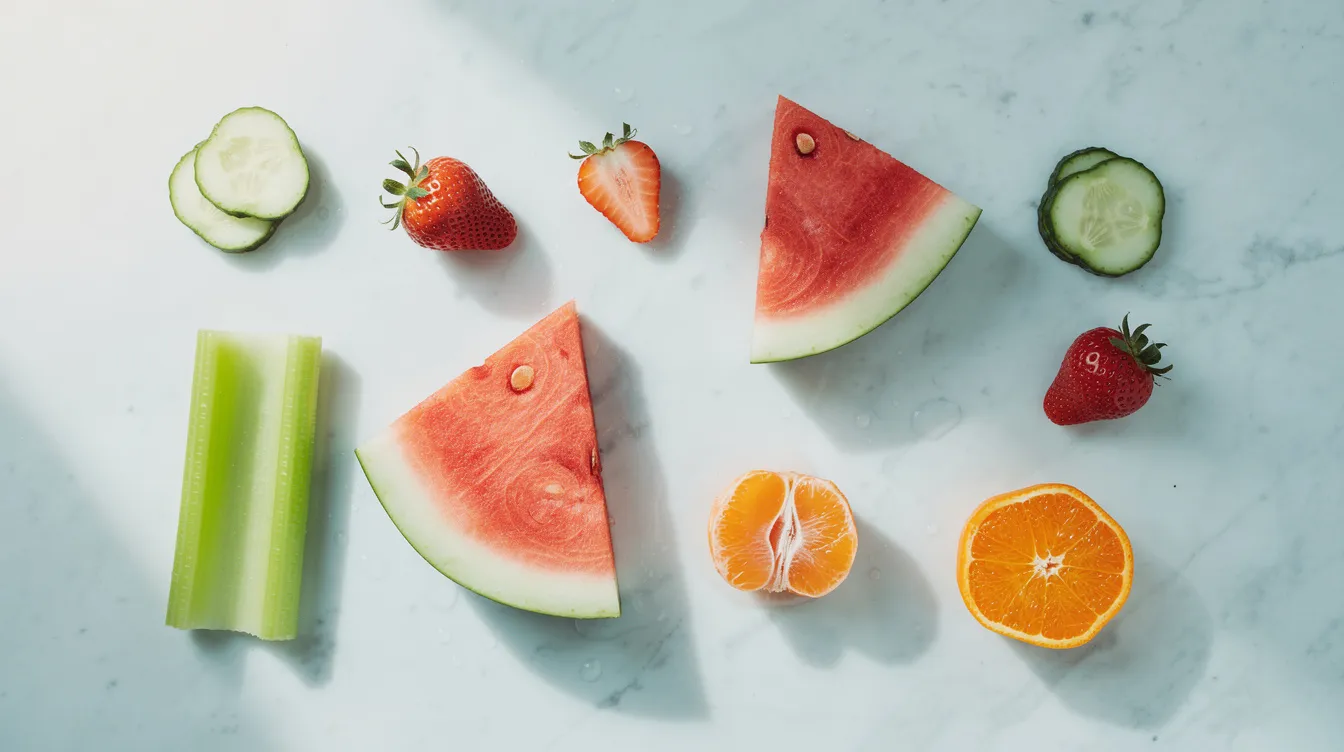
You Don't Only Drink Your Water
Most hydration advice focuses on your water bottle. That's fair — plain water is the most direct way to stay hydrated. But a meaningful portion of your daily fluid intake actually comes from food. Fruits, vegetables, soups, and even dairy products contribute real water to your body with every bite. Paying attention to what you eat is one of the easiest ways to quietly boost your hydration without pouring another glass.
This doesn't mean you can skip drinking water altogether — you can't. But if you're curious about how much water you should drink a day, knowing that food plays a role helps you see the full picture.
Why Food-Based Hydration Matters
When you eat a water-rich food, your body absorbs that moisture gradually as digestion happens. This slow release can help maintain hydration levels more steadily than gulping a large glass all at once. Water-rich foods also tend to come bundled with vitamins, minerals, and fiber — so you get extra nutritional value alongside the fluids.
On hot summer days, during exercise, or whenever your appetite is stronger than your thirst, leaning on hydrating foods is a practical and enjoyable strategy.
The Best Water-Rich Foods to Add to Your Plate
Vegetables
Many common vegetables are over 90% water by weight, making them some of the most hydrating foods you can eat.
- Cucumber – Often cited as one of the highest water-content vegetables. Crisp, mild, and easy to add to salads, snacks, or infused water.
- Celery – Another high-water-content classic. A great crunchy snack that also provides potassium and folate.
- Lettuce and leafy greens – Iceberg lettuce in particular is mostly water, but romaine and spinach are also excellent choices with a better overall nutrient profile.
- Zucchini – Versatile and mild, zucchini works roasted, spiralized, or added to soups.
- Tomatoes – Juicy and rich in lycopene, tomatoes are a hydrating addition to almost any meal.
- Bell peppers – Especially red and orange varieties, which are high in both water and vitamin C.
- Radishes – A crunchy, peppery option that adds hydration and interest to salads.
Fruits
Fruits are naturally high in water and make hydration feel like a treat, which is especially useful when plain water feels boring.
- Watermelon – The name says it all. Watermelon is a summer staple with a very high water content and natural sweetness.
- Strawberries – A great high-water berry option that also delivers vitamin C and fiber.
- Cantaloupe and honeydew – Both melons are excellent hydrators and provide potassium, which supports fluid balance.
- Peaches – Juicy stone fruits that work well fresh or sliced into yogurt.
- Oranges and grapefruit – Citrus fruits offer water plus electrolytes like potassium.
- Grapes – Easy to snack on and surprisingly high in water content.
- Pineapple – Tropical, flavorful, and a solid hydrating option.
Soups and Broths
A bowl of broth-based soup is essentially a hydrating meal in itself. Soups made with lots of vegetables amplify the effect further. They're particularly helpful in cooler months when you may not feel like reaching for a cold drink but still need to maintain your fluid intake.
Dairy and Dairy Alternatives
Milk, plain yogurt, and many plant-based milks contain a significant amount of water. They also provide protein and electrolytes, making them a well-rounded hydration source. A smoothie made with yogurt, fruit, and a splash of water or milk can be a genuinely hydrating meal or snack.
How to Build a More Hydrating Diet
You don't need to overhaul your entire way of eating. Small, consistent swaps go a long way.
Practical Tips
- Start meals with a salad or broth soup. You hydrate before your main course even arrives.
- Snack on fruit instead of dry crackers. Swap a handful of pretzels for cucumber slices and hummus or a bowl of berries.
- Add vegetables to everything. Stir spinach into scrambled eggs, toss zucchini into pasta, or layer tomatoes on sandwiches.
- Keep cut fruit and vegetables visible in your fridge. You eat what's easy to reach.
- Make smoothies part of your routine. Blending leafy greens, frozen fruit, and yogurt or milk creates a hydrating and filling drink-meal hybrid.
- Eat seasonally. Summer produce — melons, cucumbers, berries, peaches — tends to be naturally high in water, which lines up well with the season when you need hydration most.
A Note on Tracking
Most hydration trackers, including Daily Water Reminder, focus on fluid intake from drinks, and that's a sensible starting point. If you're consistently eating a diet rich in fruits and vegetables, you may find that your actual hydration needs from beverages are slightly lower than a generic daily target suggests. Every person is different, though, and your activity level, climate, and health all influence your needs.
Using an app to track your water intake still gives you a useful foundation. Think of your food choices as a quiet bonus on top of your daily drinking habits — not a replacement for them.
The Bottom Line
Staying hydrated is about more than what's in your glass. A colorful plate full of fruits, vegetables, and soups contributes meaningfully to your fluid intake every single day. The best part? These foods come with fiber, vitamins, and minerals that water alone can't provide.
Sip your water consistently, eat your vegetables, and enjoy the fact that a bowl of watermelon on a hot July afternoon is doing double duty for both your taste buds and your hydration.
This article is for general information only and is not medical advice. Always consult a healthcare professional for guidance specific to you. See our Terms.